
Reward Charts

Stop yelling and start celebrating.
Latest Articles

An Alternative Approach to Using A Kids Reward Chart

Having The Right Mindset When Implementing Reward Charts

Kids Rewards: Disguised Materialism?

Reward Charts are not a “Cure All”!

What Behavior Change can be Targeted with Reward Charts

Why Aren’t My Reward Charts Working?

A Successful Reward Plan In 5 Steps
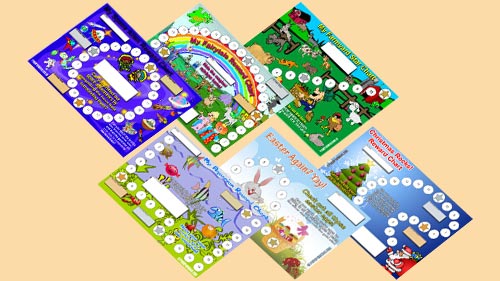
Free Printable Reward Charts

What Rewards to Offer For Kids
Reward charts are an effective tool for behavior management and modification in children. These visual aids help parents and caregivers encourage positive behavior by providing a structured system of rewards for achieving specific goals. By utilizing reward charts, families can foster a supportive environment that promotes good behavior while also teaching children about responsibility and accountability.
One of the primary advantages of reward charts is their ability to provide clear expectations. Children thrive on structure, and a reward chart outlines specific behaviors that are desired, such as completing homework, helping with chores, or practicing good manners. When children know what is expected of them, they are more likely to engage in those behaviors. This clarity helps reduce confusion and frustration for both the child and the parent.
Additionally, reward charts serve as a visual representation of progress. Children can see their achievements accumulate over time, which can be incredibly motivating. Each time they complete a task or exhibit positive behavior, they can mark it on the chart, providing a sense of accomplishment. This visual feedback reinforces their efforts and encourages them to continue striving for success.
Further, reward charts can be customized to fit the individual needs and interests of each child. Parents can choose rewards that are meaningful to their child, whether it’s extra playtime, a small toy, or a special outing. This personalization makes the reward system more engaging and effective, as children are more likely to work towards rewards that they genuinely desire.
Another significant benefit of using reward charts is that they promote positive reinforcement rather than focusing solely on punishment for negative behavior. By highlighting and rewarding good behavior, parents can create a more positive atmosphere in the home. This approach not only helps in modifying behavior but also strengthens the parent-child relationship, as children feel supported and encouraged rather than criticized.
It’s important to note that while reward charts can be highly effective, they should be used in conjunction with other parenting strategies. Consistency is key; parents should regularly update the chart and acknowledge their child’s efforts. Additionally, it’s essential to gradually phase out the rewards as the desired behaviors become habitual, fostering intrinsic motivation rather than reliance on external rewards.
In conclusion, reward charts are a valuable tool for behavior management in children. They provide clarity, motivation, and positive reinforcement, making them an effective strategy for encouraging good behavior. By implementing reward charts thoughtfully, parents can help their children develop essential life skills while nurturing a positive and loving environment.